Hawk tuah girl cryptocurrency
Stablecoins are cryptocurrencies pegged to stable assets like fiat currencies or commodities to minimize price volatility. They are commonly used for trading or remittances novoline slots. Examples of stablecoins include Tether (USDT), USD Coin (USDC) and Dai (DAI).
Just like with buying cryptocurrencies, there are several options for converting your crypto holdings into cash. While decentralized exchanges and peer-to-peer transactions may be right for some investors, many choose to use centralized services to offload their holdings.
Bitcoin is pseudonymous, rather than anonymous; the cryptocurrency in a wallet is not tied to a person but rather to one or more specific keys (or “addresses”). Thereby, bitcoin owners are not immediately identifiable, but all transactions are publicly available in the blockchain. Still, cryptocurrency exchanges are often required by law to collect the personal information of their users.
Cryptocurrency bitcoin price
That said, some service providers that accept fiat and send BTC to user wallets may take longer than ten minutes to facilitate transactions. This may be due to waiting for fiat payments to settle, batch processing, or AML (Anti Money Laundering) regulations, among other reasons.
In order to be accepted by the rest of the network, a new block contains a proof of work (PoW). This proof of work can be boiled down to the computers on the network, or miners, solving cryptographic puzzles to arrive at a solution. This process is assigned a certain level of difficulty and, although time-consuming to generate, it’s easy to verify.
Defenders of Bitcoin also point to the carbon footprint of gold, which is considered by some to be a similar asset class to BTC, being double that of Bitcoin’s. The global banking sector is estimated to have a similarly large carbon footprint, and quantifying that of the financial services industry as a whole has not yet been managed.
Bitcoin’s protocol limits its supply, effectively creating a predefined monetary policy, and sets this limit at a total of 21,000,000 BTC. This is an amount that is yet to be reached, because Bitcoins are still being created as a reward for miners.
Bitcoin is used as a digital currency for peer-to-peer electronic transactions and traded for goods or services with vendors who accept Bitcoins as payment. In fact, Bitcoin spearheaded the cryptocurrency market, an ever-growing collection of digital assets that can be sent and received by anyone anywhere in the world without reliance on intermediaries.
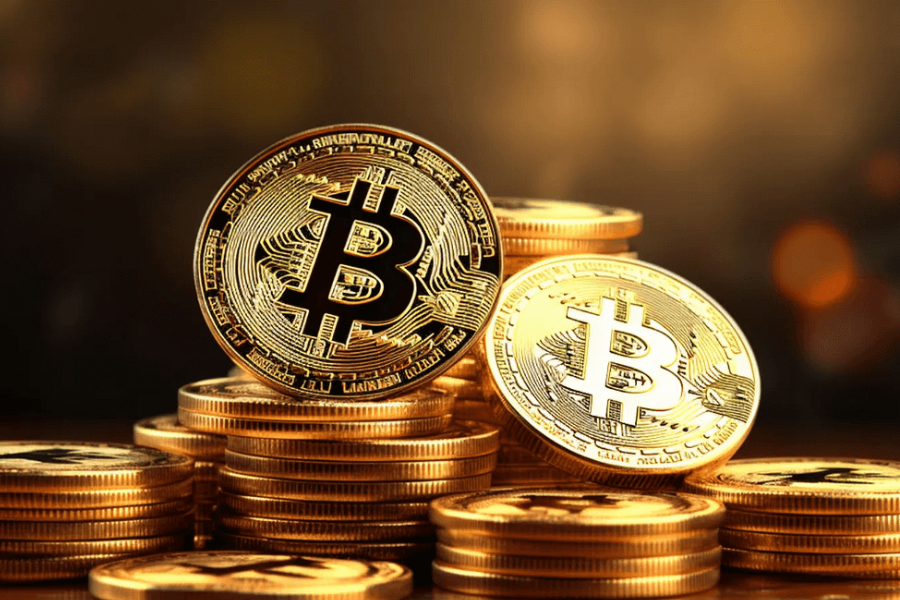
What is cryptocurrency
Units of cryptocurrency are created through a process called mining, which involves using computer power to solve complicated mathematical problems that generate coins. Users can also buy the currencies from brokers, then store and spend them using cryptographic wallets.
The first cryptocurrency was Bitcoin, which was founded in 2009 and remains the best known today. Much of the interest in cryptocurrencies is to trade for profit, with speculators at times driving prices skyward.
Once you have purchased cryptocurrency, you need to store it safely to protect it from hacks or theft. Usually, cryptocurrency is stored in crypto wallets, which are physical devices or online software used to store the private keys to your cryptocurrencies securely. Some exchanges provide wallet services, making it easy for you to store directly through the platform. However, not all exchanges or brokers automatically provide wallet services for you.
Cryptocurrency received its name because it uses encryption to verify transactions. This means advanced coding is involved in storing and transmitting cryptocurrency data between wallets and to public ledgers. The aim of encryption is to provide security and safety.
Although Bitcoin has been around since 2009, cryptocurrencies and applications of blockchain technology are still emerging in financial terms, and more uses are expected in the future. Transactions including bonds, stocks, and other financial assets could eventually be traded using the technology.
In 2010, a programmer bought two pizzas for 10,000 BTC in one of the first real-world Bitcoin transactions. Today, 10,000 BTC is equal to roughly $370 million – a big price to pay for a couple of pizzas.